
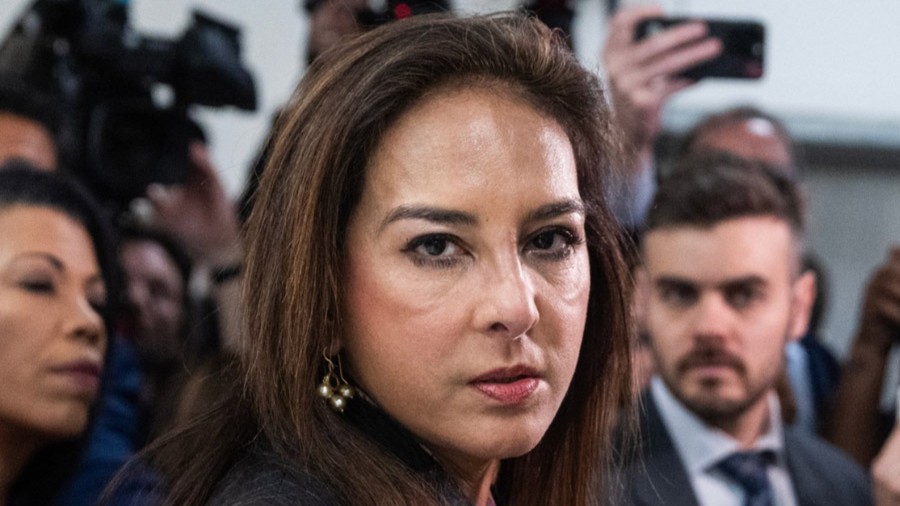
There is something almost impressive about the ability to lose in federal court 27 times and still present yourself as a champion of the rule of law. Harmeet Dhillon accomplished exactly that during her tenure running the Justice Department’s Civil Rights Division, turning an enormous campaign for Americans’ private voter information into a nationwide exhibition of legal failure.
This wasn’t some underfunded advocacy organization struggling against powerful interests. Dhillon had the resources, authority, and institutional muscle of the United States Department of Justice. She could deploy government attorneys, demand records from states, and bring lawsuits in federal court. What she couldn’t do, apparently, was convince judges that the law actually supported her demands.
And the judges weren’t exclusively Democratic appointees. Republican-appointed judges, including judges selected by Donald Trump, rejected the department’s arguments.
The result was a humiliating series of courtroom defeats that should embarrass anyone who believes federal law enforcement ought to involve more legal reasoning than political theater.
Twenty-Seven Defeats. Thirty-One Lawsuits. What an Achievement.
The numbers deserve to be examined because they are extraordinary.
Under Dhillon’s leadership, the Justice Department sued 30 states and Washington, D.C., seeking access to unredacted voter-registration records. By the time she resigned on November 5, 2026, federal district courts had dismissed 27 of those cases on the merits. Oklahoma had settled, agreeing to provide its data, while other proceedings remained unresolved.
Not one federal court had ruled in favor of the department’s legal theory.
The government wanted information that could include dates of birth, driver’s license numbers, and portions of Social Security numbers. States objected, citing privacy protections and the department’s failure to establish legal authority for such sweeping demands.
Instead of demonstrating that authority, the Justice Department repeatedly ran into the same obstacle: the law.
You would think that after the fifth or sixth defeat, someone might have questioned the strategy. After the fifteenth, perhaps someone would have considered a different interpretation of the statutes. By the twenty-seventh, the entire exercise had become an almost comical monument to bureaucratic stubbornness.
But then, admitting that your legal argument is defective requires a willingness to listen to people who disagree with you.
Even Trump’s Own Judges Rejected the Arguments
One of the most revealing aspects of the litigation was how thoroughly it demolished the excuse that unfavorable decisions were simply the work of politically hostile judges.
In Maine, Trump-appointed federal Judge Lance Walker dismissed the government’s lawsuit and described its arguments under federal election statutes as “halfhearted.” The court found that the laws did not authorize the sweeping disclosure Dhillon’s department demanded.
In Maryland, Trump-appointed Judge Stephanie Gallagher rejected another interpretation advanced by the government, explaining that it would produce an “absurd result.”
In West Virginia, Judge Thomas Johnston, appointed by George W. Bush, described the government’s demand as “devoid of any factual basis.”
These were not unfavorable headlines from partisan publications. These were federal judges assessing the legal arguments of the United States government.
And the setbacks weren’t confined to trial courts. On June 24, 2026, the Sixth Circuit Court of Appeals affirmed the dismissal of the department’s lawsuit against Michigan. The majority concluded that the relevant federal statute did not authorize the demand for Michigan’s internally generated voter database and that the department had failed to satisfy required procedures.
An appeals court had examined the government’s argument and rejected it. By August, the department’s request for rehearing had also been denied.
Dhillon’s legal crusade had received another very public lesson in the difference between demanding something and having the lawful authority to obtain it.
Using Civil Rights Laws to Justify a Voter-Data Grab
Perhaps the most offensive part of the campaign was the reliance on laws originally designed to protect voting rights.
The department invoked the Civil Rights Act of 1960, the National Voter Registration Act, and the Help America Vote Act. These laws address legitimate election-administration concerns, including discrimination, registration procedures, and maintaining accurate voter rolls.
But the Civil Rights Act of 1960 was passed in an era when Black Americans faced systematic attempts to deny them the right to vote. Its record-access provisions gave federal authorities additional means to investigate voting discrimination.
Under Dhillon, the department tried to use those provisions to obtain sensitive information on millions of registered voters for a very different purpose.
The Sixth Circuit noted the historical reversal in its Michigan decision. A law enacted to help ensure eligible Americans could vote was being invoked to identify people the government believed should not have voted.
That doesn’t automatically make every attempt to identify an ineligible voter improper. But it certainly doesn’t give the federal government unlimited authority to collect private information.
The difference matters. It is the difference between enforcing a law and treating its existence as a convenient excuse for whatever the administration wants to do.
A Federal Judge Finally Struck Down the Broader Policy
The courtroom embarrassment grew even worse on October 9, 2026.
In Common Cause v. Department of Justice, federal Judge Sparkle Sooknanan struck down the department’s broader voter-list maintenance policy. She found that it exceeded the department’s statutory authority, was arbitrary and capricious, and violated the Privacy Act and the Paperwork Reduction Act.
The decision addressed a particularly troubling element of the program: comparing voter records against federal citizenship databases that could contain inaccurate or outdated information.
That matters because an incorrect citizenship match isn’t merely an administrative inconvenience. It can place an eligible American’s voting rights at risk, including those of naturalized citizens.
The court rejected the department’s attempt to minimize those dangers. It vacated the challenged policy rather than accepting the government’s insistence that its intentions justified its methods.
The Justice Department appealed and requested a stay. On November 2, the same judge rejected that request, leaving the ruling in place while the appeal proceeded.
Imagine being entrusted with protecting civil rights and having a federal court strike down your department’s policy partly because it endangered those very rights.
That is a damning indictment of the policy, regardless of how enthusiastically its architects defended it.
Election Integrity Is Not a Blank Check
The department repeatedly justified its campaign by pointing to the need for accurate voter rolls and preventing unlawful voting. Those are legitimate government responsibilities. States are obligated to maintain their registration records, and federal law provides mechanisms for enforcing election requirements.
But legitimate objectives don’t excuse unlawful methods.
The government cannot announce a desirable goal and then demand whatever private information it finds useful. Its authority must come from law, and that authority has limits.
The distinction seems elementary. Yet Dhillon’s department spent months testing those limits, losing case after case, while refusing to abandon its sweeping interpretation.
Oklahoma’s agreement to provide data demonstrates that the department obtained some cooperation. It does not erase the judicial decisions rejecting its legal arguments elsewhere. Nor does it establish that every state resisting the demands was concealing wrongdoing.
Twenty-seven dismissals aren’t evidence that voter fraud doesn’t exist. They are evidence that the department repeatedly failed to establish the legal authority it claimed to possess.
That’s a distinction Dhillon’s defenders should have no trouble understanding.
A Spectacular Waste of Government Power
The true cost of this episode cannot be measured by courtroom defeats alone.
Every lawsuit consumed attorney time, government resources, and attention that could have been directed toward other civil rights enforcement. States also had to defend themselves against demands that federal courts repeatedly found legally unsupported.
No comprehensive public accounting establishes the total cost of this litigation. But government lawyers and court proceedings are not free, and thirty-one lawsuits constitute a substantial commitment of public resources.
Dhillon’s division could have pursued narrower requests, developed stronger legal arguments, or reconsidered its approach after early dismissals. Instead, the campaign continued until it became one of the defining failures of her tenure.
She resigned on November 5, insisting that her departure was voluntary and highlighting what she considered her accomplishments. She has every right to defend her record.
But the record doesn’t disappear with the resignation letter.
A civil rights chief entrusted with formidable federal authority left behind an extraordinary string of courtroom rejections and a voter-data policy that a federal judge found unlawful.
There is no reason to celebrate that performance, and certainly no reason to confuse it with successful law enforcement.
Harmeet Dhillon wanted the states to take her demands seriously. The courts took the law seriously instead.
Twenty-seven defeats later, that distinction is the most revealing part of her legacy.
References
- University of Wisconsin Law School: DOJ Lawsuits Seeking States’ Sensitive Voter Data
- ProPublica, October 16, 2026: How Judges Dismissed Trump’s DOJ Voter Data Lawsuits
- United States v. Benson, Sixth Circuit Court of Appeals, June 24, 2026
- Common Cause v. U.S. Department of Justice, October 9, 2026
- Common Cause v. U.S. Department of Justice, November 2, 2026, Denial of Stay
- U.S. Department of Justice: Lawsuits Against Arizona and Connecticut
- CBS News, November 5, 2026: Harmeet Dhillon Resigns From the Civil Rights Division